AI Supply Chain Risk Management: A Vendor Risk Playbook
Build an AI supply chain risk management program that governs vendor risk from intake to incident response. Learn assessment, monitoring, and contract controls.
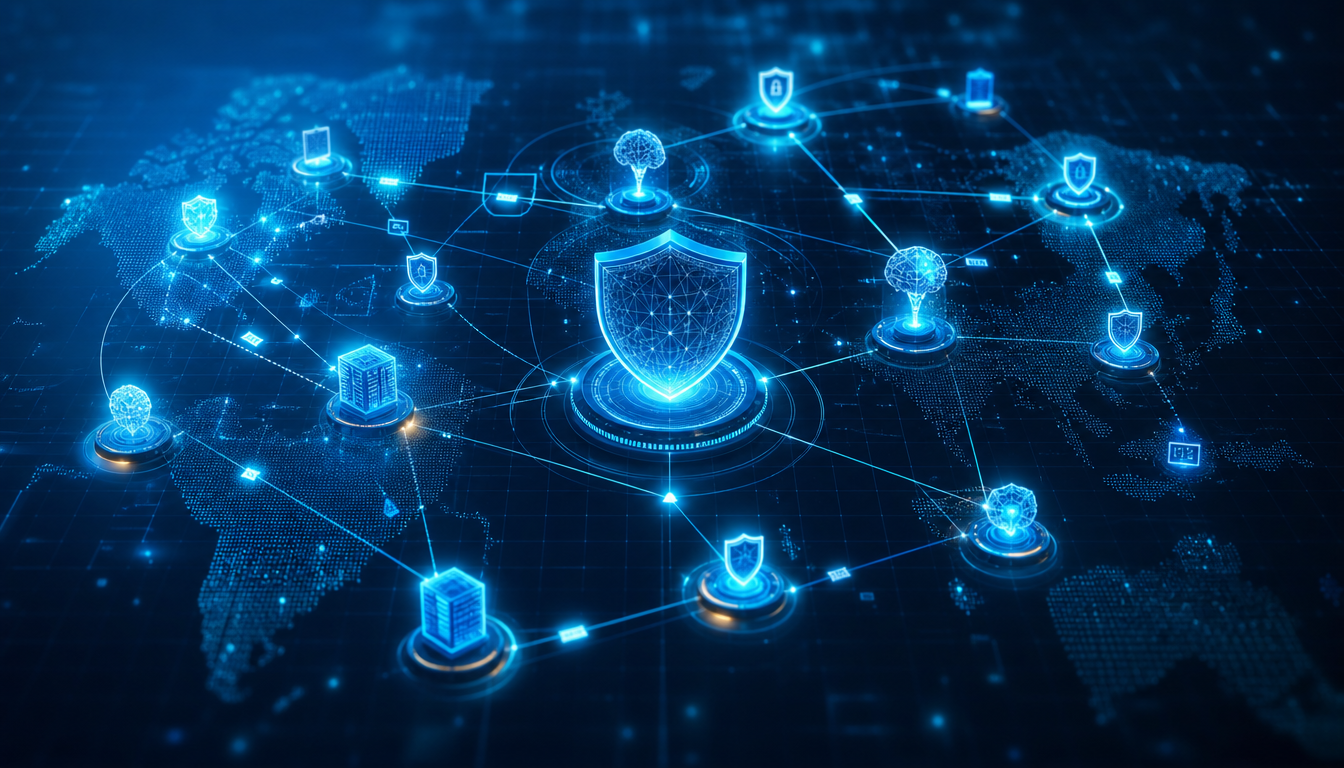
AI supply chains have become the quiet backbone of modern enterprise operations. A typical mid-market company now depends on dozens of AI vendors for everything from code completion and customer support to sales automation and security analytics. Each vendor adds value, but each also introduces a new risk surface: data leakage, model drift, prompt injection, unauthorized sub-processors, and regulatory exposure that can flow directly back to your organization.
Traditional vendor risk management was built for deterministic software. A SaaS provider shipped a feature set, updated on a release cycle, and lived behind a perimeter you could reason about. AI vendors are different. Their behavior changes with every model update, prompt template, and training run. The risk is not just in the vendor's infrastructure; it is in the way the model reasons with your data and acts on your behalf.
AI supply chain risk management is the discipline of identifying, assessing, governing, and continuously monitoring the AI vendors and models that power your business. It extends classic third-party risk management with controls that account for autonomous behavior, data lineage, and non-deterministic outputs. The goal is not to block AI adoption. It is to adopt AI faster because you have a defensible program that your board, auditors, and customers can trust.
Why AI Supply Chain Risk Has Become a Board-Level Topic
Security leaders have always managed supply chain risk, but AI has moved it to the top of the agenda. The change is driven by three forces: scale, opacity, and regulatory pressure.
The scale of AI adoption
Research from MIT Sloan and BCG found that 78% of organizations use third-party AI tools in their daily operations. Many of these tools were adopted by individual teams without formal security review. The result is a sprawling inventory of agents, models, and APIs that the security team may not even know exists until after a failure.
Opacity in model behavior
When you buy a traditional SaaS product, you can test what it does and expect it to keep doing that. AI models are probabilistic. The same prompt can produce different outputs at different times. The model may have been trained on data you cannot inspect, and it may be fine-tuned in ways the vendor does not fully disclose. This opacity makes standard vendor assessments incomplete.
Regulatory pressure is accelerating
The EU AI Act, the NIST AI Risk Management Framework, and emerging SEC disclosure rules all place responsibility on organizations that deploy AI systems. Regulators are not interested in whether the vendor caused the problem. They are interested in whether your organization governed the risk. That makes AI supply chain risk management a compliance requirement, not just a security nice-to-have.
The Anatomy of AI Supply Chain Risk
Before you can govern AI vendor risk, you need to name the specific risks. They cluster into four categories: data, model, operational, and compliance.
Data risk
AI vendors often need access to your most sensitive information: customer records, source code, financial data, security logs, and internal communications. The risk is not just that a vendor gets breached. It is that your data is used to train a shared model, retained longer than expected, or shared with an undisclosed sub-processor. Without clear data-handling commitments, you may lose control of information you are legally obligated to protect.
Model risk
Models can hallucinate, be jailbroken, or produce biased outputs. A vendor that relies on a foundation model may not have direct control over its behavior. If the model makes a harmful decision on your behalf, your organization may bear the reputational and legal consequences. Model risk assessment must examine how the vendor tests, versions, and monitors model behavior.
Operational risk
AI vendors can become single points of failure. If a customer-support agent, sales-assistant agent, or security-analytics agent is down, a business process can stop. Operational risk also includes the vendor's own supply chain. Many AI vendors depend on a small number of foundation model providers, cloud hosts, and data brokers. A failure or price shock upstream can cascade to you.
Compliance risk
AI systems can create compliance obligations you did not anticipate. A recruiting tool might violate anti-discrimination rules. A support bot might mishandle healthcare data under HIPAA. A financial model might trigger fair-lending scrutiny. Compliance risk means understanding which laws apply to each use case and ensuring the vendor can support your obligations.
Building a Single Source of Truth for AI Vendors
You cannot govern what you cannot see. The first step in any AI supply chain risk management program is to build an authoritative inventory of every AI vendor, model, and use case.
Discover shadow AI
Shadow AI is the most common gap in enterprise programs. Employees sign up for AI productivity tools with corporate email addresses, connect them to Slack, Notion, or Google Drive, and start processing company data. Discovery should combine multiple signals: SSO logs, expense reports, DNS traffic, code repository scans, and self-attestation from business owners. The inventory should capture not just the vendor name, but also the business owner, data classification, integration surface, and production status.
Classify by blast radius
Not every AI vendor deserves the same level of scrutiny. A tool that drafts internal blog posts is different from a tool that handles customer PII or makes credit decisions. Classify vendors by blast radius: high-risk systems get deep assessment, continuous monitoring, and executive approval; low-risk systems get lighter controls and periodic review. This tiering keeps the program proportionate and scalable.
Maintain model lineage
For each vendor, document which models are used, which versions are deployed, and which foundation model providers sit behind them. A vendor that claims to use "a proprietary model" may actually be calling OpenAI, Anthropic, or another provider through an API. Model lineage matters because a change in foundation model can change your risk profile overnight.
Assessing AI Vendors Beyond the Checkbox
The standard vendor security questionnaire is not enough for AI. You need to interrogate how the system is built, how it behaves, and how it handles your data.
Go beyond SOC 2
SOC 2 reports are useful for infrastructure and process controls, but they rarely cover AI-specific risks. Ask for evidence on model testing, prompt-injection defenses, data isolation, sub-processor disclosure, and incident response for AI failures. A vendor that cannot answer these questions clearly is a vendor you should not trust with high-risk data.
Demand model evaluation evidence
Request evaluation results that map to recognized frameworks. The OWASP Top 10 for LLM Applications is a good starting point for technical risks. Ask for jailbreak resistance, prompt-injection test results, hallucination rates on domain-specific tasks, and refusal behavior on sensitive prompts. Independent red-team reports are more valuable than self-attestations.
Test the integration surface
Score each vendor on what happens if it is compromised. Which systems can it read? Which can it write? What identities does it assume? A summarization tool that only reads public documents is a different risk than a sales-automation agent that can send email, update CRM records, and pull customer lists. The assessment depth must match the integration's blast radius.
Inspect data handling and retention
Require a written commitment that your data will not be used to train shared models without explicit opt-in. Confirm data retention periods, deletion procedures, and geographic locations of data storage and processing. If the vendor uses sub-processors, demand disclosure and the right to approve changes. Any hedging on these points is a signal to escalate or walk away.
Continuous Monitoring and Behavioral Telemetry
Assessment is a snapshot. AI models change continuously, so monitoring must be continuous too. The goal is to detect drift, misuse, and upstream compromise before they become incidents.
Log prompts, responses, and tool calls
Capture telemetry at the gateway layer so you can replay what an agent did without relying solely on vendor logs. Redact secrets at capture time, retain enough context for investigations, and stream the data into your SIEM. Vendor logs are useful, but they should never be your only source of truth.
Establish behavioral baselines
Define normal behavior for each AI vendor: typical prompts, data volumes, destinations, and time-of-day patterns. Alert on deviations. A customer-support agent suddenly pulling ten times its usual volume of customer records is a signal. A research agent calling an outbound email tool it has never used before is a signal. These anomalies are often the earliest indicator of prompt injection or account compromise.
Monitor upstream changes
Track model version changes, sub-processor updates, and security incidents from your AI vendors. Many vendors do not proactively notify customers of model changes. Build a process to check release notes, subscribe to security advisories, and require change notification clauses in contracts. A model update can silently change the risk profile of a system you already approved.
Contractual and Procurement Controls
Legal contracts are where risk is allocated. Standard SaaS agreements were not written for AI, so they must be updated to cover the specific behavior of autonomous systems.
Update data processing addenda
DPAs should explicitly address AI use: prohibition on training shared models with your data without consent, data retention and deletion obligations, geographic restrictions, and audit rights over the vendor's data pipeline. If the vendor uses foundation models, the DPA should also cover sub-processor disclosure and approval.
Require model change notification
Include a contractual requirement that the vendor notify you of material model changes, new sub-processors, or changes to data handling. Define what constitutes a material change. A new foundation model version, a change in training data source, or a new geographic region for processing should all trigger notification.
Define incident response and liability
AI incidents can be ambiguous. Contracts should define what counts as an AI security incident, notification timelines, and the vendor's obligations to assist with investigation and remediation. Liability caps should be proportionate to the risk. A high-risk AI agent that can send customer communications or modify records should carry stronger liability commitments than a low-risk summarization tool.
Build procurement checkpoints
Make AI vendor risk review a mandatory checkpoint in procurement. No AI vendor should reach production without security, legal, and compliance sign-off. The checkpoint should scale with risk: low-risk tools get a lightweight review, high-risk tools get a full assessment, architecture review, and executive approval.
Incident Response and Kill Switches
Even with strong controls, incidents happen. The difference between a manageable incident and a crisis is often how quickly you can contain the blast radius.
Plan for AI-specific incidents
Update your incident response playbooks to cover AI scenarios: prompt injection leading to data exfiltration, a model producing harmful or biased outputs, a vendor compromise that exposes your data, or an AI agent taking unauthorized action. Each scenario should have clear ownership, detection criteria, and containment steps.
Isolate identities and credentials
Give every AI agent its own machine identity with short-lived credentials scoped to the minimum resources it needs. Route access through a broker or gateway you control. If an agent is compromised, you can revoke its access without touching broader systems. Rehearse the revocation process so it can be executed in minutes, not hours.
Rehearse the kill switch
A kill switch is the ability to disconnect an AI vendor or agent immediately. If you cannot cleanly disconnect a vendor during an incident, you do not truly own the risk. Test kill switches regularly, document the steps, and ensure the operations team knows how to execute them without developer involvement.
Measuring and Reporting the Program
Executives and boards want to know that AI supply chain risk is being managed. A small set of metrics, reported consistently, builds confidence and justifies investment.
Core metrics
Track the percentage of AI vendors with completed assessments, the percentage of high-risk vendors with continuous monitoring, mean time to detect anomalous behavior, and the number of critical findings closed. Trend these over time to show maturation. A single scorecard is more useful than a long list of ad-hoc reports.
Risk exposure reporting
Translate technical risk into business terms. Estimate the potential cost of a data breach, regulatory fine, or operational disruption tied to AI vendors. Compare that exposure to the investment in the risk management program. This framing helps security leaders secure budget and headcount.
Board-ready narrative
Board reporting should answer three questions: What AI vendors do we depend on? What is the worst thing that could happen? What are we doing about it? A concise narrative supported by metrics, risk tiers, and a roadmap is far more effective than a technical control checklist.
Frequently Asked Questions
What is AI supply chain risk management?
AI supply chain risk management is the process of identifying, assessing, governing, and monitoring the AI vendors, models, and data flows that support your organization. It extends traditional third-party risk management to address the unique risks of autonomous, non-deterministic systems that can change behavior without a traditional software release.
How is AI vendor risk different from traditional SaaS vendor risk?
Traditional SaaS products are deterministic and change on a known release cycle. AI systems are probabilistic, can change behavior with every model update, and may train on data you cannot inspect. This means point-in-time assessments are insufficient and must be paired with continuous monitoring, model change notification, and behavioral baselines.
What should be in an AI vendor assessment?
An AI vendor assessment should cover data handling and retention, model provenance and version control, prompt-injection and jailbreak defenses, sub-processor disclosure, integration blast radius, incident response obligations, and alignment with frameworks like the NIST AI Risk Management Framework and OWASP Top 10 for LLM Applications.
How do we find shadow AI in our organization?
Combine signals from SSO logs, expense reports, network traffic, code repositories, and self-attestation surveys. Look for sign-ups with corporate email, OAuth grants to AI tools, and browser extensions that access corporate data. Feed discoveries into a single inventory and tier them by risk.
Which frameworks apply to AI supply chain risk?
Start with the NIST AI Risk Management Framework for structure, ISO/IEC 42001 for management-system maturity, the OWASP Top 10 for LLM Applications for technical controls, and the EU AI Act for regulatory obligations if you operate in or sell to the EU. Map each vendor's controls to these frameworks for reusable audit evidence.
How often should we reassess AI vendors?
Reassess at least annually, and additionally on any material change: a new model version, a new sub-processor, a change in data handling, a security incident, or an expansion into a higher-risk use case. Continuous telemetry should trigger out-of-cycle reviews when behavior drifts from baseline.
Take Control of Your AI Supply Chain
AI supply chains are not going to shrink. The organizations that thrive will be the ones that inventory every AI vendor, assess them against AI-specific risks, govern them through contracts and procurement, monitor their behavior in production, and can disconnect them in minutes when something goes wrong.
Vault Agentics helps enterprise security teams build AI supply chain risk management programs end to end. From vendor assessment playbooks and gateway telemetry to executive reporting and incident response, we provide the structure and expertise to adopt AI with confidence.
Schedule a security posture assessment to talk to an AI supply chain risk expert.