
Agentic SOC Architecture for Human-Governed SecOps
Build a human-governed agentic SOC architecture with bounded AI agents, unified telemetry, programmable detection, auditability, and resilient SecOps controls.
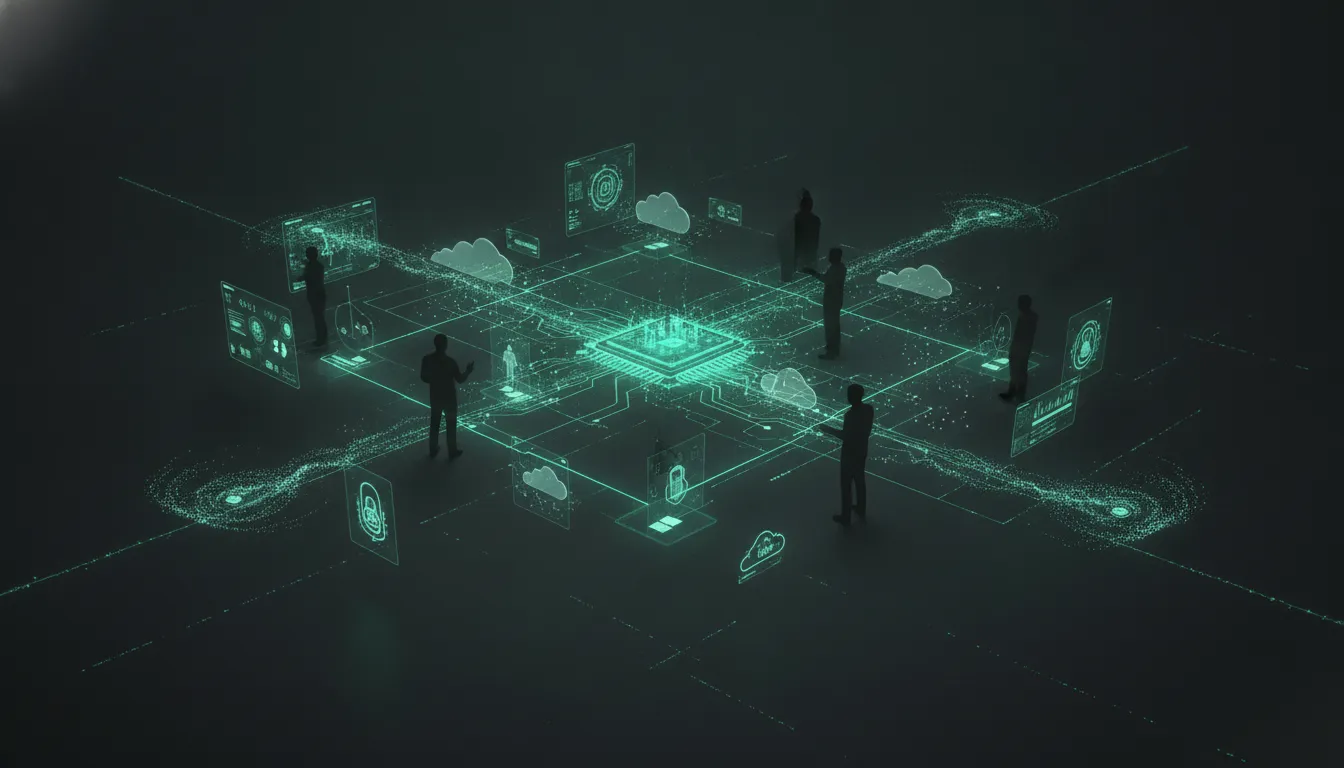
Security leaders designing an agentic SOC architecture face a control problem before they face an automation problem. An AI agent that investigates quickly but acts without bounded identity, reliable telemetry, or accountable escalation simply compresses the path to an expensive mistake. The architecture must make machine-speed defense observable, reversible, and answerable to human decision-makers.
An agentic SOC architecture is a governed security operating model that connects normalized telemetry, narrowly scoped AI agents, programmable detection logic, policy-based action, and human approval rights across the threat lifecycle. It gives agents room to automate repeatable work while reserving risk acceptance, sensitive containment, and strategic judgment for qualified experts.
Schedule a strategy conversation about a human-governed agentic SOC architecture.
What an Agentic SOC Architecture Must Control
An agentic SOC architecture controls six connected planes: telemetry, context, reasoning, action, identity, and governance. Treating these planes as separate products creates the same fragmentation that undermines traditional security operations. The architecture must instead define how evidence enters the system, how agents form and test hypotheses, which actions are permitted, and who remains accountable when the system encounters an exception.
The telemetry plane collects events from identity providers, endpoints, cloud workloads, network controls, SaaS applications, data stores, and security tooling. The context plane adds asset criticality, ownership, identity relationships, vulnerability state, business service dependencies, and recent activity. Without that context, an agent sees an isolated signal rather than an incident with operational meaning.
The reasoning plane turns evidence into a bounded investigation. It should record the question being tested, the evidence considered, the confidence of the conclusion, and the next smallest action that could confirm or disprove the hypothesis. The reasoning plane is not a license for unrestricted model behavior. It is a controlled decision process with defined tools, data boundaries, and stop conditions.
The action plane executes an approved response, such as collecting additional evidence, opening a case, revoking a session, isolating a device, or escalating to a human. Actions need risk classes, preconditions, rollback paths, and a clear owner. The identity plane binds each action to a specific non-human identity and, where applicable, to the human or service that delegated authority. The governance plane records policy versions, approvals, exceptions, and outcomes.
This structure gives CISOs and MSSPs a practical way to evaluate architecture quality. A platform that advertises autonomous investigation but cannot show the evidence chain, identity context, policy decision, and approval record is not an accountable agentic SOC. It is an opaque automation layer. Vault Agentics approaches this design problem through advisory, architecture, implementation, and managed agentic security services that connect operating intent to working security controls.
How Should Telemetry and Context Be Designed?
Reliable telemetry is the operating foundation of an agentic SOC architecture. Agents should consume security evidence through a defined telemetry contract rather than through a loose collection of tool connectors. The contract identifies event type, source, timestamp, subject, asset, action, outcome, confidence, retention, and provenance. It also defines how missing, delayed, duplicated, or contradictory events are handled.
Start with a source map that reflects the attack paths the organization must govern. Identity telemetry should cover authentication, token issuance, privilege changes, service accounts, workload identities, and anomalous delegation. Endpoint telemetry should expose process activity, device posture, network connections, and sensitive file access. Cloud telemetry should include control-plane activity, workload behavior, storage access, secrets use, and infrastructure changes. Application and SaaS telemetry should identify user actions, API calls, data movement, and administrative changes.
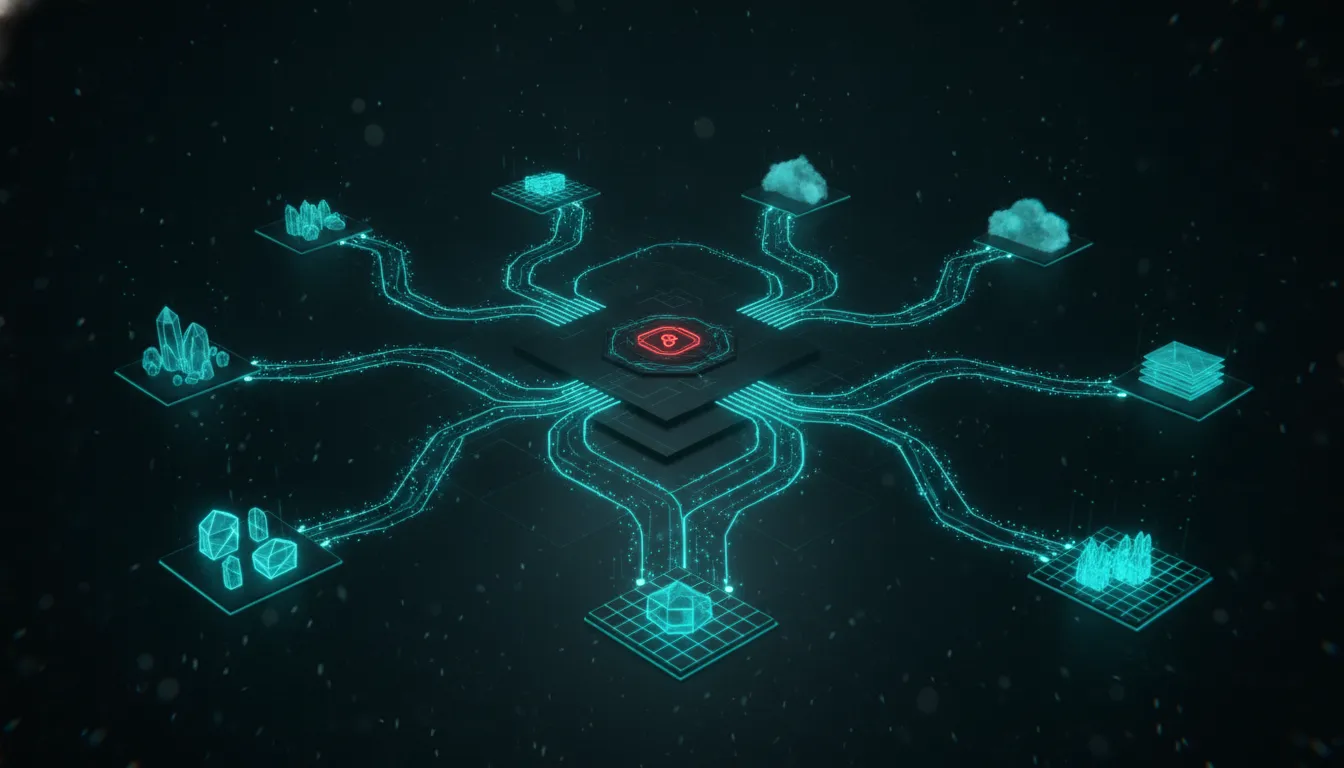
Normalization matters because agents cannot safely compare signals that use inconsistent identities, timestamps, or severity models. Establish canonical identifiers for people, service accounts, devices, workloads, applications, findings, and incidents. Preserve the original event alongside the normalized record so an investigator can trace a conclusion back to source evidence. Store confidence and freshness with the event, because an old asset record should not carry the same weight as a current identity or endpoint signal.
Context enrichment should be deliberate rather than indiscriminate. Add the information needed to answer a defined investigation question, then restrict access to sensitive data that does not affect the decision. A device isolation agent may need device ownership, active user, criticality, and network state. It may not need the contents of unrelated documents. This data-minimization approach reduces privacy exposure and narrows the blast radius of a compromised agent.
Telemetry quality also needs operational objectives. Measure collection coverage, event latency, parser failures, duplicate rates, identity resolution, enrichment freshness, and source outages. Assign an owner to every material gap. If a critical source falls outside its freshness objective, the agent should lower confidence, pause high-impact action, and escalate the degraded condition rather than presenting a confident but incomplete conclusion. This is where a prior AI-native SOC blueprint becomes an implementable architecture: enrichment and reasoning need explicit data contracts to operate safely.
What Boundaries Should AI Agents Have?
AI agent boundaries should be narrow, explicit, and testable. Each agent needs a named purpose, permitted data sources, allowed tools, action limits, escalation rules, time limits, and a human owner. An agent designed to enrich an identity alert should not inherit the ability to disable accounts, alter firewall policy, or query every data store in the environment.
Separate agents by security function and consequence. A telemetry agent can validate source health and normalize events. An enrichment agent can resolve identity, asset, and threat context. An investigation agent can test a hypothesis using read-only queries and approved evidence collection. A response agent can execute reversible containment within a defined scope. A communication agent can draft a case summary but should not notify customers or regulators without human review.
Use capability boundaries, not just prompts. Tool permissions should be enforced by the identity and policy layers so a model cannot bypass a written instruction by generating a different request. Apply least privilege to data reads and actions. Restrict network destinations, command types, query scope, execution time, and maximum affected assets. Treat sensitive actions such as deleting data, changing production access, rotating shared credentials, or communicating an external incident as human-controlled unless a separate approved policy explicitly says otherwise.
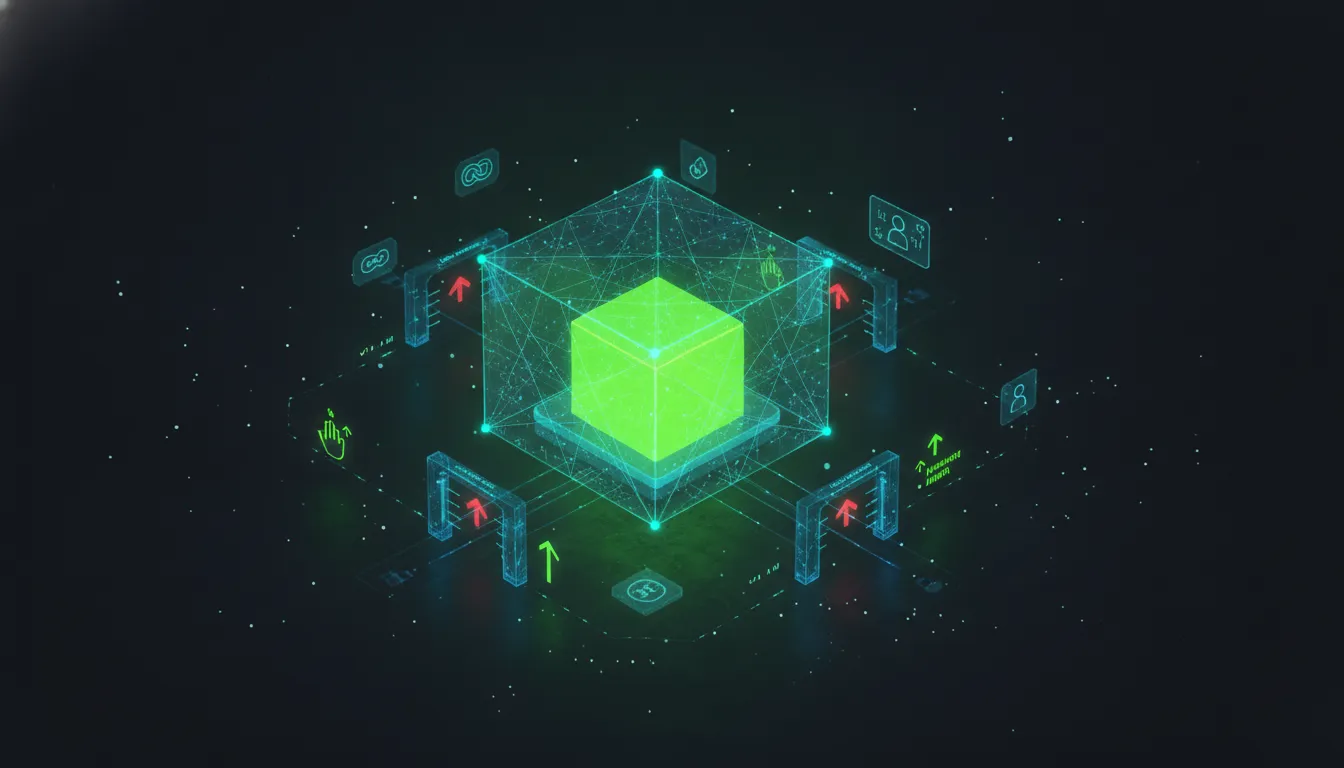
Model delegation as a controlled relationship. The human or service that starts a workflow should be recorded, but the agent must also have its own non-human identity. The record should show who delegated authority, which policy granted it, which tools it called, and which resources it touched. NIST guidance on software and AI agent identity and authorization emphasizes distinct agent identification, delegated access, logging, and data-flow visibility. Those principles are directly relevant to SOC operations.
Build failure behavior into every boundary. An agent should stop when evidence conflicts, a source is stale, a requested action exceeds scope, a tool returns an unexpected result, or the model cannot explain its conclusion. It should preserve the incomplete investigation and route it to an expert with the evidence already collected. This is more useful than forcing every workflow to end in an automated verdict. Vault Agentics frames this combination of AI-native security and human expertise as a way to increase coverage without transferring unbounded authority to software.
How Does Agentic SOC Architecture Turn Detection Into a Strategic Control Plane?
Programmable detection logic turns security policy into a versioned control plane that agents can apply consistently. Detection should not be limited to static signatures or opaque model scores. It should combine deterministic rules, identity and asset relationships, behavioral context, and agent-generated hypotheses, with each decision mapped to a defined response path.
Represent detections as policy objects with a clear owner, purpose, inputs, logic, confidence model, severity, expiration, and response class. A rule might identify a privileged token used from an unmanaged endpoint, a cloud role accessing an unusual data store, or a service account creating a new delegation path. The useful output is not simply a high severity label. It is a structured finding that explains the observed behavior, affected identities and assets, evidence quality, likely impact, and next approved action.
Version control is essential. Every change to detection logic should have an author, reviewer, test result, deployment timestamp, and rollback target. Test policies against historical incidents, representative benign activity, and adversarial edge cases before expanding scope. Track precision, recall, false-positive drivers, missed detections, investigation time, and action outcomes. Disable or revise logic that creates noise, stale assumptions, or unsafe automation.
Agents add value when they can compose detection logic across sources without silently changing the governing policy. An investigation agent can connect an identity event to endpoint behavior, cloud access, and a business service. It can propose a new correlation or ask for more evidence. A policy owner decides whether that proposal becomes an approved detection. The architecture therefore distinguishes between generated insight and executable control.
Use a risk-based action ladder. Low-risk actions include enrichment, deduplication, evidence collection, case creation, and analyst notification. Medium-risk actions may include revoking a single session, adding a temporary block, or isolating a non-critical endpoint when confidence and scope thresholds are met. High-risk actions require human approval, dual control, or an incident commander. This ladder makes automation measurable and keeps the system aligned with NIST CSF 2.0 risk-management outcomes rather than with an abstract autonomy score.
- Automate: enrich, deduplicate, collect evidence, open cases, and notify analysts.
- Bound and monitor: revoke a single session, apply a temporary block, or isolate a non-critical endpoint only when confidence and scope thresholds are met.
- Escalate: require human approval, dual control, or an incident commander for high-impact actions.
The control plane should also expose exceptions. A business-critical service, executive account, production workload, or regulated data store may require a higher approval threshold. Exceptions need an owner, reason, start date, expiration, compensating control, and review cadence. An exception without an expiration becomes an unmonitored bypass. A programmable detection layer is strategic only when it can enforce both the standard and the approved deviation.
Book an architecture review to define your first bounded detection and response workflow.
Which Decisions Must Remain Human-Governed?
Human decision rights must be designed before autonomous response is enabled. Security leaders should define which decisions agents may make, which decisions require review, and which decisions remain exclusively human. This allocation should reflect business impact, reversibility, confidence, evidence quality, regulatory sensitivity, and the potential effect on customers or employees.
Humans should retain authority over risk acceptance, material containment, production-impacting changes, sensitive investigations, customer communication, regulatory reporting, legal escalation, and exceptions to security policy. Experts also own the operating model itself. They set priorities, approve detection policies, challenge agent conclusions, review drift, and decide when an agent should be retrained, restricted, or removed from service.
Agents should handle work that is high-volume, bounded, observable, and reversible. They can correlate events, gather evidence, summarize an incident, test a hypothesis, recommend a containment step, or execute a low-impact action that satisfies explicit preconditions. The approval record must distinguish recommendation from authorization and authorization from execution. A human clicking approve after a vague summary is not meaningful governance.
Design escalation as a decision packet. The packet should include the incident hypothesis, timeline, affected identities and assets, evidence links, confidence, policy version, proposed action, expected impact, rollback plan, unresolved questions, and the decision deadline. The expert should be able to approve, reject, modify, defer, or request additional evidence. Each option should create a durable record and route the work to the next accountable owner.
Governance also requires separation of duties. The agent that proposes a high-impact action should not be the only system that validates scope and authorization. For material events, use independent policy evaluation, two-person approval, or a human incident commander. MSSPs should define how customer decision rights interact with provider authority, especially when a managed service is monitoring multiple environments with different risk tolerances.

The governance model should be documented in an AI and security control framework that security, privacy, legal, and executive stakeholders can review. OWASP's agentic AI guidance is a useful external reference for threat modeling the risks of excessive agency, tool misuse, and weak authorization. The objective is not to slow every workflow. It is to make the high-consequence paths deliberate.
How Do Auditability and Resilience Shape the Design?
Auditability and resilience are architectural requirements, not reporting features added after deployment. Every agent decision should be reconstructable from the triggering input, retrieved evidence, model or rule version, policy evaluation, identity context, tool calls, approvals, action results, and final disposition. If a security leader cannot reconstruct why the system acted, the system is not ready for consequential autonomy.
Store an append-only event trail with synchronized timestamps and stable identifiers. Link related events into an incident graph while preserving the original records. Capture prompts, retrieved context, tool inputs, tool outputs, model version, policy version, confidence, and human decisions according to the organization's privacy and retention requirements. Redact secrets and unnecessary personal data before they enter the audit record, but do not remove the evidence needed to explain an action.
Separate operational logs from evidence records. Operational logs help teams troubleshoot latency, connector failures, and queue behavior. Evidence records support incident review, customer reporting, compliance evidence, and post-event learning. Both need access controls, integrity protection, retention rules, and monitoring. A log that agents can rewrite or delete during an incident cannot serve as reliable evidence.
Resilience begins with graceful degradation. When a model provider, connector, data source, identity service, or policy engine fails, the SOC should fail into a known mode. That may mean read-only investigation, deterministic rules, manual triage, delayed action, or a secondary workflow. Do not let a missing enrichment source produce an automatic high-impact response. Mark the data gap, reduce confidence, notify the responsible owner, and preserve the event for later reconciliation.
Test recovery as an operating capability. Exercise provider outages, telemetry delays, stale credentials, poisoned context, prompt injection, tool misuse, duplicate actions, rollback failure, and conflicting approvals. Define recovery time and recovery point objectives for the evidence plane and the action plane. Verify that a human can pause an agent, revoke its credentials, inspect active workflows, and resume or cancel work without losing the incident trail.
Resilience should include adversarial validation. MITRE ATT&CK provides a common language for adversary tactics and techniques, while the OWASP Agentic AI threats and mitigations reference can inform tests of excessive agency, insecure tool use, and weak trust boundaries. These references do not replace environment-specific testing. They help teams build a repeatable challenge set for their own architecture.
What Is a Practical Implementation Sequence for CISOs and MSSPs?
A practical implementation sequence starts with control clarity, not with the largest possible agent deployment. CISOs and MSSPs should first define the decisions the SOC must improve, the evidence required to make them, the actions that are safe to automate, and the people who own exceptions. The architecture then grows from those decision contracts.
Begin with a current-state assessment. Inventory telemetry sources, identity relationships, security tools, response playbooks, data owners, approval paths, and material gaps. Measure alert volume, investigation effort, response latency, false positives, source freshness, and the percentage of incidents that require manual context gathering. Map critical business services and identify which containment actions are reversible. This creates a baseline for selecting a bounded first workflow.
Next, establish the identity and policy substrate. Create distinct non-human identities for agents, apply least privilege, define delegated authorization, centralize policy evaluation, and make action scope observable. Establish the evidence schema and retention model before asking agents to execute. If an organization cannot answer which identity performed an action or which policy allowed it, it is not ready to expand autonomy.
Choose one workflow with meaningful volume and controlled consequence. Identity investigation, suspicious sign-in enrichment, cloud privilege review, or endpoint evidence collection are often useful starting points because they produce measurable analyst relief without requiring immediate destructive action. Define success in operational terms: evidence completeness, investigation time, escalation quality, false-positive rate, rollback success, and analyst acceptance.
Run the workflow in recommendation mode before execution mode. Compare agent reasoning with expert decisions, inspect unsupported conclusions, and refine telemetry and policies. Then allow only reversible actions that satisfy explicit thresholds. Expand scope only after the audit trail, human controls, failure behavior, and recovery process have passed review. Keep a kill switch and a documented rollback for every expansion.
Finally, operate the agentic SOC as a managed control system. Review policies, agent identities, connector health, exception age, action outcomes, and model behavior on a defined cadence. Report decision-grade measures to executives and customers instead of only reporting alert counts. Vault Agentics' managed agentic security services connect 24/7 monitoring, threat hunting, AI-augmented investigations, incident response playbooks, and human expert oversight for organizations that need SOC-grade coverage without building a large internal team.
For teams assessing readiness, the next step is a focused architecture review that identifies the first bounded workflow, the required telemetry, the human approval model, and the controls needed to operate safely. The goal is not to claim that every SOC task should become autonomous. The goal is to make the right tasks faster while making consequential decisions more accountable.
Contact Vault Agentics to map your first governed agentic SOC workflow.
Frequently Asked Questions
How should an enterprise decide whether an agentic SOC action is safe to automate?
Assess the action's business impact, reversibility, evidence quality, scope, identity permissions, and failure behavior. Automate actions that are bounded, observable, and reversible first. Require human approval for actions that affect production availability, sensitive data, customers, regulated reporting, or material risk acceptance. Reassess the classification when the underlying system, policy, or business dependency changes.
How does an agentic SOC architecture differ from traditional SOAR automation?
Traditional SOAR generally follows pre-authored playbooks with fixed branching logic. An agentic SOC can form and test investigation hypotheses, select approved tools, and adapt the sequence of evidence gathering within defined policy boundaries. The distinction is not unrestricted autonomy. A mature architecture combines deterministic controls with bounded reasoning, explicit identity, durable audit evidence, and human decision rights.
What should an MSSP document when operating agentic SOC capabilities for customers?
An MSSP should document tenant boundaries, delegated authority, agent identities, data access, telemetry coverage, policy ownership, escalation thresholds, approval responsibilities, action logs, retention, exception handling, and incident communications. Customer-specific risk tolerances must be represented in policy rather than left to informal analyst knowledge. The service should also show how an agent is paused, revoked, reviewed, and recovered after a control or provider failure.
How can security leaders measure whether an agentic SOC is improving outcomes?
Measure evidence completeness, time to qualified investigation, time to containment, false-positive rate, escalation quality, analyst hours released from repetitive work, rollback success, source freshness, policy exceptions, and material incidents missed or mishandled. Pair operational metrics with business context, such as critical services protected and decisions requiring executive attention. Faster actions without better evidence or lower risk do not demonstrate a successful architecture.